
Two things held in relationship —
without one consuming the other.
—
The & group is a small constellation of related ventures, working in adjacent fields toward a common idea.
And, Per Se
There was a time when the alphabet had twenty-seven letters. Schoolchildren finished their recitation with a strange little chant after Z: and, per se, and. It meant “and, by itself, and.” Said fast enough, often enough, it became a word: ampersand.
Later the alphabet was tidied up and the twenty-seventh letter was let go, but it was never erased. It just stopped having a fixed place. It went to live between things.
And that is where we live too.
Our founder understood that letter long before she knew its history.
She was born with a name that meant of the people, under a sky that seemed to agree: sun in Aquarius, the sign of the collective, at home in the eleventh house, the house of community and belonging. Aries rising, the sign that leads the way, turning Aquarius’s gift for being ahead of its time into action. A visionary with a founder’s hands. And a moon in Taurus, where the moon is said to be strongest and most content: rooted, and devoted to beautiful, lasting things.
A sun made for the people, a spirit made for new beginnings, and a heart that only ever wanted to stay.
It would take her half a life to see the three were never at war.
At twenty-one she was leading a multicultural community of thousands of volunteers across the Southern Cone: Argentina, Chile and Uruguay. By her mid-twenties she was in Kuala Lumpur, helping build a national startup ecosystem and a company made of idle spaces, coffee tables and the strangers who filled them. Then Bali, San Francisco, Lisbon, São Paulo, Floripa, New York City.
In every city, someone eventually squinted at her and asked, so who are you? And what do you do, exactly? Most people were trying to fit her into a box that already existed.
Artist or strategist. Extrovert or introvert. Prose or poetry. Writer or doer. Career woman or caring mother. At several turning points, she went quiet. She turned inward, unsure who to introduce herself as, or which language her words wanted to live in: Portuguese, English or Spanish.
The mind likes to simplify. It files anything complex next to something it already knows. But she wasn’t born to fit in. She was born to create belonging.
She had a private strategy for when a place got too small: letting go. She would pack her bags and start again somewhere with better light. Nomad, then exile, then refuge. Each city was a shelter. None of them was a home.
All along, she was writing a book that named community as the truest kind of home. She was describing the very thing she was looking for: the place every hero’s journey ends.
Then came a house in New Jersey with a man she loved, two children who wanted stories at bedtime, a driver’s license at last. For the first time in years, nothing needed to be left behind. That frightened her more than leaving ever had.
One night she took the old question to paper and wrote down everything she was.
Culture, the way a home, and a woman, looks, feels and dresses.
The essays, the memoir, the fiction, all the small proofs that people were here.
The collective, and the belief that a community, done well, is how ordinary people build an economy and their own freedom: the growth, the enterprise, the strategies and the small daily actions that keep the world moving, carried by the hands of people who want to leave things better than they found them.
The list wouldn’t shrink, so she stopped trying to make it.
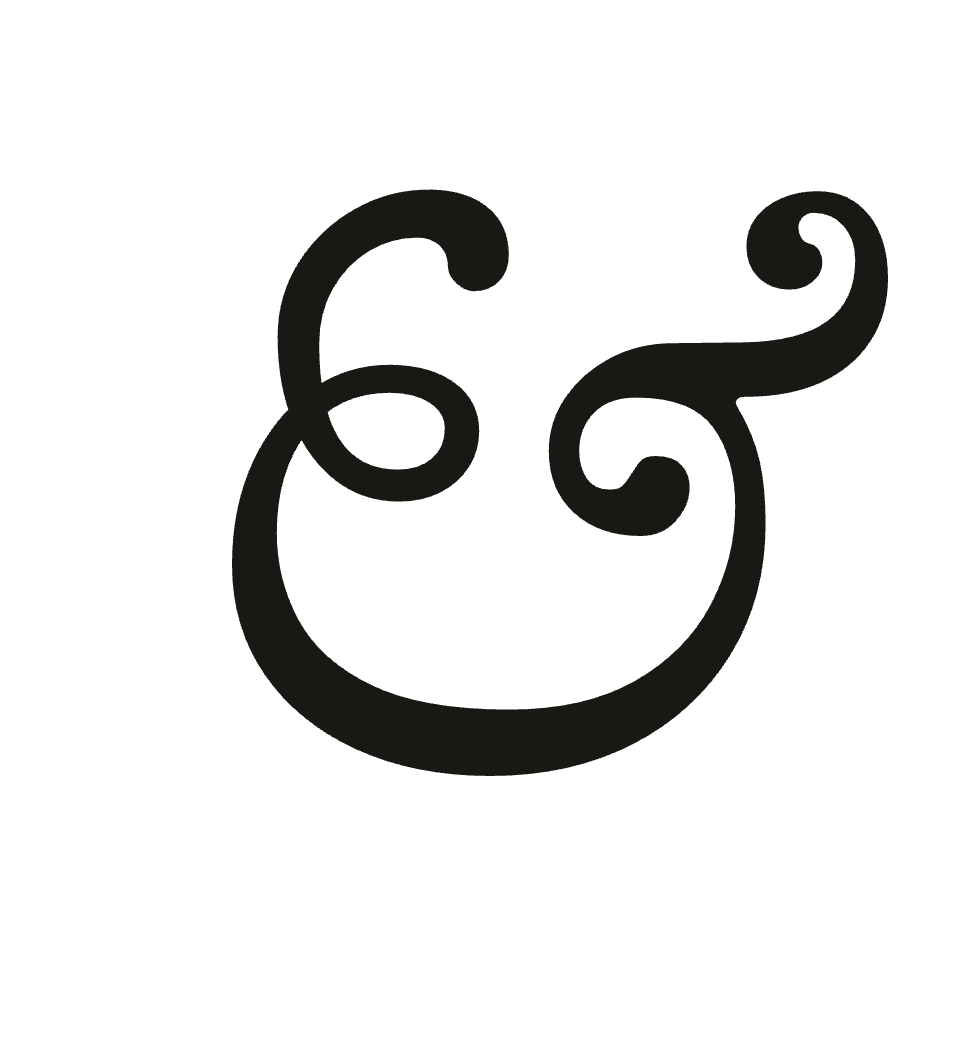
She drew the twenty-seventh letter in ink. She noticed something new. At the top of the glyph the pen closes a small loop, a room with a door. Then the line keeps going, down and around, out into a long open curve that reaches toward whatever comes next. A shelter and a bridge in one stroke. A home that reaches out.
It had never been a letter that couldn’t decide.
It had always been the letter that held things together.
So she built a house in its shape.
At its heart, a kitchen and the room where bedtime stories are told, because making a home and raising children were never a pause from the work. They were its foundation.
One room for culture, for the way a home and a woman look, feel and dress.
A studio where women in transformation gather to turn what they have lived into memory, story and direction.
A press, Traços de Humanidade, human traces, for the stories people leave behind.
A workbench where small pieces of metal are engraved with tenderness and faith, made to be worn close to the skin.
A front door that opens onto the neighborhood, where children play, parents make memories side by side, and a village slowly finds itself.
And one room with a long table, where communities sit down and design their own prosperity.
She hung no sign saying what any of it was.
She called it by the only word that fit: The & Group.
Now, when people ask who she is and what she does, she smiles and answers with the oldest word in the room.
And.
She thinks of Rosa then, the line she has carried since she was young: o que ela quer da gente é coragem. Leaving had taken courage. Staying turns out to take more.
This time she didn’t let go. She added rooms.
And, by itself, and.